/197/1/logo.png)
Car Finance Early Settlement: Your Complete Guide

Everything you need to know before paying off your car finance ahead of schedule
When you sign a car finance agreement, you’re thinking about spreading the cost of the purchase, but there are instances when you might be thinking: can I just pay this off now and be done with it?
Maybe you’ve come into some money, maybe you want to sell the car, or maybe you’re just tired of the monthly payments, and you have enough savings to cover the full price.
Whatever the reason, settling your car finance early is possible, but the amount you’ll pay isn’t as simple as adding up what’s left on the agreement.
This guide explains how early settlement works, how the figure is calculated, what it costs, and whether it’s actually worth doing in your situation.
If you’re looking to hand your car back partway through the agreement rather than handing it off, that’s a different process called voluntary termination. We’ve covered that in detail in our guide to getting out of a car finance agreement.
Key Takeaways:
- Dealers can settle your existing car finance as part of the sale process
Early settlement means paying off your remaining car finance balance in one go, before the agreement’s natural end date
Your settlement figure is not the same as adding up your remaining monthly payments; it includes a statutory interest adjustment
HP and PCP are settled slightly differently
A settlement quote is a time-limited estimate; the settlement figure is the exact amount due on the day you pay
Whether early settlement saves you money depends on how far through the agreement you are and what fees apply
What is Early Settlement?
Early settlement is when you pay off the full outstanding balance on your car finance agreement before the contract’s original end date, rather than continuing with your monthly payments through to term. Once it’s settled, ownership transfers to you (HP), or you can take ownership by paying the remaining balance, including the balloon payment (PCP).
It’s different from missing payments or falling behind, and it’s also different from voluntary termination, which is a legal right to hand back the car rather than buy it. In short, early settlement is buying your way out of car finance.
How Is a Settlement Figure Worked Out?
A settlement figure is not the sum of your remaining monthly payments. Under the Consumer Credit (Early Settlement) Regulations 2004, your lender must apply a statutory rebate on the interest you would otherwise have paid for the rest of the term. This exists because you’re no longer borrowing the money for as long as originally agreed, so you shouldn’t pay interest as if you were.
- In practice, your settlement figure is usually made up of:
- The outstanding capital you still owe
- Interest accrued up to the settlement date
- Any fees due under the agreement (such as an early settlement or exit fee, where applicable)
- For PCP agreements, the balloon payment if you were to keep the car
The rebate means that settling early is often cheaper overall than paying every remaining instalment, but it rarely feels like a saving as dramatic as people expect, since you’re still paying for the time you’ve already had the car.
Settlement Quote vs Settlement Figure
These two terms get used interchangeably, but they are not quite the same thing:
- A settlement quote is an estimate your lender provides when you ask, “How much would it cost to settle today?” It’s typically valid for a set period, because interest accrues daily.
- A settlement figure is the exact final amount due on the specific day you make the payment
If your quote expires before you get around to paying, you’ll need to request an updated one. Always make sure to get this in writing from your finance provider.
Early Settlement on HP vs PCP
The two most common finance types, Hire Purchase and Personal Contract Purchase, are settled slightly differently, mainly because of how PCP is structured around a balloon payment
Hire Purchase
You’re financing the full value of the car, so settling early means paying off the remaining capital and interest (less the statutory rebate). Once settled, the car is yours outright.
Personal Contract Purchase
You’ve been financing the vehicle's depreciation, not its full value; settling early to take ownership means paying the balloon payment on top of the outstanding balance. This can make the figure look larger than most people expect.
Is It Worth Settling Your Car Finance Early?
There’s no single answer here; it depends on your circumstances.
It’s More Likely to Be Worth It If:
- You’re well into the agreement, so there’s less interest left to save on relative ot any fees
- You’re planning to sell or trade in the car anyway
- You have funds available without touching an emergency fund
It’s Less Likely to Be Worth It If:
- You’re early into a long agreement, where the interest rebate may not offset any exit costs
- You’d need to use savings for something else
- Your agreement includes exit fees that eat into the benefit
The only way to know for certain is to request an up-to-date settlement figure and compare it honestly against your remaining payments plus any balloon payment. It’s also worth asking your lender whether a payment holiday or restructuring might address the underlying issue if affordability, rather than ownership, is the real motivation.
Selling a Financed Vehicle: Your Options
When selling a car under finance, you have several options available. Many dealers will handle the settlement process as part of the transaction, making it a convenient option for sellers. However, you'll need to understand your current financial position and ensure all parties involved communicate effectively throughout the process.
The most straightforward approach is to sell your car to a dealer who will settle your existing finance directly with the lender. This route eliminates the need for you to find the funds to settle the finance yourself. Alternatively, you could pay the finance independently before selling, though this option requires having the funds available upfront.
Positive vs. Negative Equity: What's the Difference?
Before selling a car with outstanding finance, you’ll need to know whether you're in positive or negative equity, as this can significantly impact your options. Your equity is the difference between your car's current market value and the amount you still owe on your finance agreement.
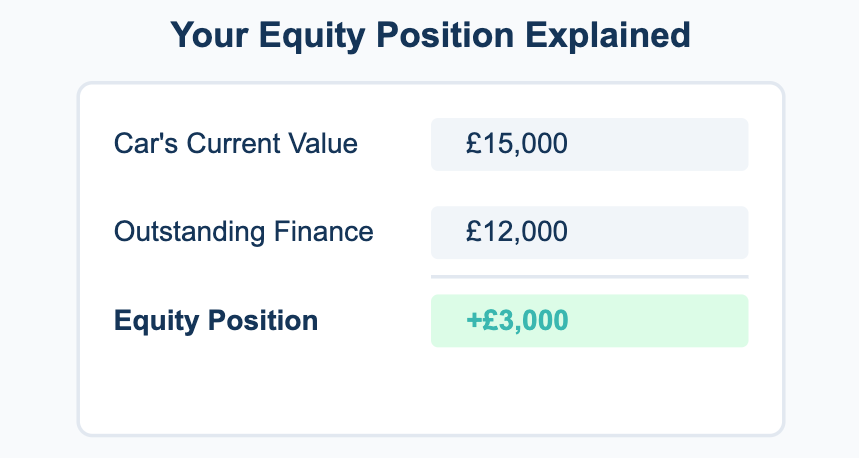
As you can appreciate, this figure will determine your next steps and could affect how much money you'll need to complete the sale process. Below we explain the difference between positive and negative equity:
Positive Equity
When your car is worth more than the remaining balance on your loan, this is called positive equity. The good news is that if you’re in this position, the surplus can be used as a deposit on your next vehicle or pocketed as cash. For example, if your car is worth £15,000 and your settlement figure is £12,000, you have £3,000 in positive equity.
Negative Equity
If you owe more than your car's current value, you're in what’s called negative equity, and this isn’t necessarily a good position to be in. For instance, if your settlement figure is £15,000 but your car is only worth £12,000, you have £3,000 of negative equity that needs to be addressed as part of the sale.
How to Settle Your Car Finance: Step by Step
The journey from deciding to settle your car finance to completing the final transaction follows several key steps. To give you a better idea of what to expect, this section will walk you through each stage of the settlement process, ensuring you know exactly what happens when, who's responsible for what, and how to protect your interests along the way.
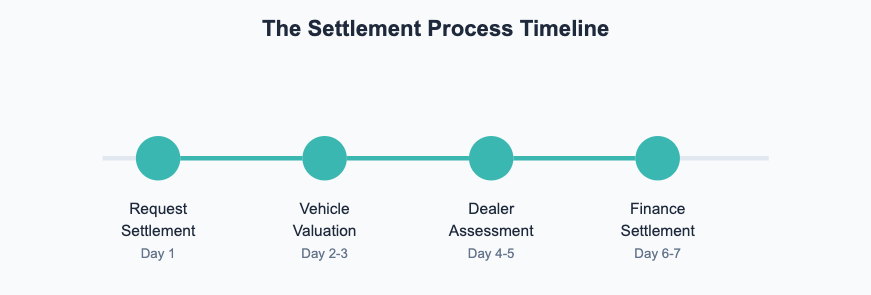
Whether you're settling through a dealer or managing the process yourself, understanding this process is essential for a successful finance settlement that ticks all the right boxes. The car finance settlement process typically follows these steps:
- Contact your finance company for an up-to-date settlement figure
- Get a valuation for your vehicle
- Compare the settlement figure to your car's value to understand your equity position
- Discuss settlement options with the dealer
- Ensure all paperwork is completed correctly
- Ask for written confirmation once the finance is settled
If you plan to sell your car to a dealer, they will usually be happy to contact your finance company directly and offer to pay off the outstanding balance. If you’re in positive equity, they will either pay you any excess you’re owed or give you the option to offset it against the cost of a new vehicle. Be aware that if you’re in negative equity, you’ll be required to cover the shortfall before any transaction can be completed.
It’s worth noting that the settlement figure provided by your finance company is typically valid for only 7-14 days. If the sale process extends beyond this period, you'll likely need to request an updated figure, which may differ from the initial one.
Frequently Asked Questions:
We hope our guide to selling a financed car through a dealer has proved a useful read. As you can imagine, we often get asked questions relating to settling vehicle finance, so in this section, we’ve shared some of our most commonly asked ones:
How long does it take for finance to clear on a car?
Once a settlement payment has been made, it typically takes 1-3 working days for the finance to clear and be marked as settled. However, the exact timeframe can vary depending on your finance provider and the payment method used. For your peace of mind, we recommend you always request written confirmation from your finance company once the settlement has been processed.
Can you negotiate a car finance settlement figure?
While the basic settlement figure is usually non-negotiable as it represents the remaining balance plus interest, there may be room to negotiate early termination fees or other administrative charges. Contact your finance provider directly to discuss your options. Some lenders may be willing to reduce or waive certain fees, particularly if you're experiencing financial difficulties, so we encourage you to be open about your circumstances.
Can car finance be approved and then declined?
Yes, in some cases, car finance can be provisionally approved but later declined during final checks. This usually happens when:
The lender discovers additional information during detailed credit checks
The documentation provided by you doesn't match the initial application
There are discrepancies in employment or income verification
To avoid this situation, we recommend you always be completely honest and accurate with your initial application.
Can I give my car back halfway through the finance term?
Most finance agreements include voluntary termination rights, typically once you've paid 50% of the total amount payable. This is known as your Section 75 rights under the Consumer Credit Act. However, there are some clauses to be aware of:
You must ensure the car is in good condition
Mileage must be within reasonable limits
Any damage beyond normal wear and tear may incur charges
This option may affect your credit score
What happens if I miss payments on my car finance?
Missing payments can have serious consequences. It will, in most cases, negatively impact your credit score, and you may be charged with late payment fees on top of what you already owe. Worse still, the finance company could take legal action, and your vehicle may be repossessed. If you're struggling with payments, contact your lender immediately to discuss payment plans or alternative arrangements.
Can I sell my car with outstanding finance if I'm in arrears?
While it's possible to sell a car with outstanding finance even if you're in arrears, it does prove more complicated. You'll need to settle any missed payments, and the lender may require full settlement immediately. As such, we advise you to always be transparent with both the dealer and your finance company about your situation.
Is it better to settle car finance early or continue with payments?
The answer to this question depends entirely on your individual circumstances. While early settlement can save you money on interest in the short term, be aware that some agreements have early repayment charges that may offset any savings you make. We recommend you calculate the total cost of both options before making a decision, and it’s worth speaking to your lender to check whether there are any payment holiday options that may help if money is temporarily tight.
Does early settlement affect my credit score?
Settling early and in full is generally viewed positively, since it shows you've met your obligations, and it won't damage your credit score the way missed payments would. It's worth checking your credit file a few weeks after the settlement to confirm it's been reported correctly.
Is early settlement the same as voluntary termination?
No, early settlement means paying off the agreement to take ownership (or clear it before selling). Voluntary termination is a separate legal right to hand the car back in partway through the agreement, rather than buying it.
Get Expert Support with Octane Finance
At Octane Finance, we understand that managing car finance can be complex. That's why we're here to help you navigate every step of your car finance journey, whether you're looking to settle existing finance, sell your vehicle, or explore new finance options.
While we’re a broker and not a lender, we can still offer you expert guidance on settling your existing car finance and source competitive rates on new car finance packages. We pride ourselves on making car finance simple and accessible for everyone. With years of experience in the automotive finance industry, we've helped thousands of customers across the UK successfully manage their car finance needs.
Ready to Take the Next Step?
Don't let car finance complications hold you back. Contact us today to discuss your options. Whether you're looking to settle the finance on your current car, upgrade your vehicle, or start a new agreement, we're here to pair you with your perfect lender.