
Car Finance for Young Drivers: How It Works and How to Improve Your Chances
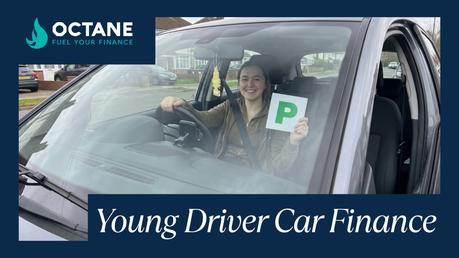
Passing your test is a huge moment, but for many new drivers, the reality is that you need a car, and you probably don't have thousands sitting in a savings account. Car finance is how most people in the UK get on the road, but if you're 18, 19 or in your early twenties, the process can feel stacked against you.
The good news is that being young doesn't rule you out, as lenders don't decline applications because of age alone. They look at your credit history, your income, and whether the monthly payments are realistically affordable. This guide explains what that means for young drivers, which finance options tend to suit a first car, and the practical steps you can take to make an approval more likely.
Can young drivers get car finance?
Yes, in the UK, you can apply for car finance from the age of 18, because that's the age at which you can legally sign a credit agreement. There's no separate "young driver" product, so you apply for the same types of finance as everyone else, and the lender assesses your application on its merits.
Where young drivers tend to find it harder is not age itself but what usually comes with it:
A thin credit file: If you've never had a credit card, loan or phone contract in your name, lenders have very little evidence of how you manage repayments.
Shorter employment history: A new job, a probation period or part-time hours can make your income look less settled.
Higher running costs: Insurance for new drivers is expensive, and lenders factor in your wider outgoings when assessing affordability.
None of these is a dead end, and each one has a practical fix, which we cover below, so keep reading!
Young driver or first-time driver?
These terms get used interchangeably, but they aren't quite the same. A first-time driver is anyone who has recently passed their test, whatever their age. A young driver is usually someone aged 18 to 25, and the challenge for lenders is typically their limited credit history rather than their driving experience. A 35-year-old who has just passed their test may have a long credit record and find finance relatively straightforward. An 18-year-old who has been driving for a year may still have almost no credit footprint.
What lenders look at when you apply
Understanding the assessment takes a lot of the mystery out of it. Most lenders will consider:
Your credit history: Not just your score, but whether there's enough history to judge, and whether there are any missed payments or defaults.
Your income: Usually from employment or self-employment. Lenders want to see that it's regular and can be verified, typically through payslips or bank statements.
Affordability: Your income minus your committed outgoings (rent, phone, existing credit, and so on). Since the FCA's Consumer Duty came into force, lenders and brokers must be confident the agreement is suitable and affordable for you.
Address history and residency: You'll need to be a UK resident, and being registered on the electoral roll at your current address helps lenders confirm your identity.
Your driving licence: Most lenders expect a full UK licence, although policies vary.
You can read more about the various steps in our Complete Car Finance Guide.
Car finance options for young drivers
There are three main routes most young drivers consider. The right one depends on whether you want to own the car, how long you plan to keep it and how much you can comfortably pay each month.
Hire Purchase (HP) | Personal Contract Purchase (PCP) | Personal Loan | |
Do you own the car? | Yes, after the final payment | Only if you pay the optional final (balloon) payment | Yes, from day one |
Monthly payments | Higher, as you repay the full amount | Lower, as part of the cost is deferred | Depends on rate and term |
Mileage limits | No | Yes | No |
Large payment at the end | No | Yes, if you want to keep the car | No |
Who it often suits | Drivers who want to own a reliable first car outright | Drivers who want lower payments and may change cars in a few years | Drivers with an established credit history |
Hire Purchase (HP)
With HP, you pay a deposit and then fixed monthly payments. Once you make the final payment, the car is yours. There are no mileage limits, which is useful if you're commuting or driving to university. For many young drivers buying a modest used car, HP is the simplest option to understand and budget for.
Personal Contract Purchase (PCP)
PCP keeps monthly payments lower because part of the car's value is deferred to a final "balloon" payment at the end. You can pay it off and keep the car, hand it back, or use any equity toward your next one. PCP comes with a mileage allowance and condition requirements, so it's worth being realistic about how much you'll drive. Excess mileage and damage charges can add up.
Personal loan
A personal loan gives you the money upfront, so you buy the car as a cash buyer and own it immediately. The catch for young drivers is that unsecured loans lean heavily on credit history, so they can be harder to obtain or more expensive if your file is thin.
Joint applications and guarantors
If your own credit file isn't strong enough yet, involving someone else can help. There are two ways this can work, and they're often confused.
Joint application: You apply with another person, such as a parent or partner. Both of you are equally responsible for the repayments from day one, and the agreement appears on both credit files.
Guarantor: Someone agrees to step in and make the payments if you can't. They aren't making the payments day to day, but they are legally committing to cover them if needed, and missed payments can affect their credit too.
Either route is a serious commitment for the other person. It's worth having an honest conversation about what happens if your circumstances change before anyone signs anything.
Can students get car finance?
Students can get car finance, but the income question matters. Student loans and maintenance grants generally aren't treated as income for car finance purposes, because they're designed to cover living and tuition costs rather than to repay credit. Lenders will usually look for earnings from a part-time job, placement or other employment that you can evidence. If your income is limited, a joint application or guarantor may be the more realistic route.
The real cost of running a car as a young driver
The monthly finance payment is only part of the picture, and this is where many young drivers get caught out. Insurance in particular can rival or exceed what you pay for the car itself.
According to the Confused.com Car Insurance Price Index for Q2 2026, drivers aged 17 to 20 were quoted an average of £1,813 for comprehensive cover, around 3.3 times the £552 average for drivers aged 50 to 59. Add fuel, road tax, servicing, MOT and tyres, and the total monthly cost of keeping a car on the road can be significantly higher than the finance payment alone.
Lenders take your outgoings into account, so a realistic budget helps your application as well as your bank balance. A few things that can bring costs down:
Choose a car in a low insurance group: smaller, lower-powered cars are usually cheaper to insure.
Consider a telematics (black box) policy: These price your cover partly on how you actually drive.
Get insurance quotes before you choose the car: Two similar-looking cars can sit in very different insurance groups.
Factor in the full term: A slightly cheaper car on a shorter agreement may cost less overall than a nicer car stretched over a longer one.
Understand the deal before you sign
Car finance can be confusing at any age. A Carmoola survey of 2,000 drivers, published in February 2026, found that 44% of consumers don't fully understand APR, rising to more than half of younger buyers.
Before you sign any agreement, make sure you know:
The APR, which shows the annual cost of borrowing, including interest and compulsory fees.
The total amount payable, which tells you what the car will actually cost you over the agreement.
The term, meaning how many months you'll be paying.
Any final payment, if you're on PCP, and what happens if you go over your mileage.
How the broker or dealer is paid. Brokers and dealers usually receive commission from the lender, and they should tell you about this.
If anything is unclear, ask. A reputable broker will be happy to explain the agreement line by line.
How to improve your chances of approval
You can strengthen your application before you apply, often within weeks.
Register on the electoral roll at your current address: It's free and helps lenders verify your identity.
Check your credit report with Experian, Equifax and TransUnion: Correct any errors, and make sure your details are consistent.
Build a positive payment record: A mobile phone contract or a small credit card that you clear in full each month shows lenders you can manage credit.
Keep your current account in good order: Avoid going overdrawn or bouncing payments in the months before you apply.
Save a deposit if you can: It isn't always required, but a deposit reduces the amount you borrow and can make your application more attractive.
Be realistic about the car: A sensible, affordable first car is far more likely to be approved than an ambitious one.
Avoid multiple applications: Each full application leaves a hard search on your credit file. Use a broker that runs a soft search first to see your options without affecting your score.
Why use a broker as a young driver?
Different lenders have different criteria. Some are comfortable with thin credit files and newer drivers, and others aren't. Applying to lenders one by one risks a string of hard searches and declines, which can make the next application harder.
A broker like Octane works across a panel of lenders and can match your circumstances to the ones most likely to consider you. At Octane, we start with a soft search, so you can see what's available without it affecting your credit score. Our team can also talk you through HP and PCP in plain English, so you understand exactly what you're agreeing to before you sign anything. Finance is subject to status and affordability.
Getting a quote before you visit a dealership also puts you in a stronger position. You'll know what you can afford and have a figure to compare against any finance offered on the forecourt.
Young Driver Car Finance FAQs
Can you get car finance at 18?
Yes. 18 is the minimum age to sign a credit agreement in the UK, so you can apply for car finance from your 18th birthday. Approval depends on your credit history, income and affordability rather than your age, and some lenders set their own higher minimum age.
Can a 17-year-old get car finance?
No. A 17-year-old can drive and own a car but can't sign a credit agreement until they turn 18. Options at 17 include saving towards a deposit, buying with cash, or a parent taking out finance in their own name. If a parent finances the car, they are the borrower and are responsible for the agreement.
Can a 19-year-old get car finance?
Yes. At 19 you're assessed in the same way as any other applicant. Having a year or two of employment and a phone contract or bank account in good standing can make a real difference to your options.
Can I get car finance with no credit history?
Often, yes. Some lenders specialise in applicants with thin or no credit files. You may be offered a higher rate to start with, but making every payment on time builds your credit history and can improve your options in the future.
Can I get car finance with a provisional licence?
Some lenders will consider applicants with a provisional licence, but most prefer a full UK licence. You'll also need to be properly insured and supervised until you pass your test, so it's worth checking whether finance makes sense before you've passed.
Do students qualify for car finance?
Students can qualify if they have evidence of income from employment, such as a part-time job or placement. Student loans and maintenance grants usually aren't counted as income. A joint application or guarantor can help if your income is limited.
Do I need a deposit for car finance as a young driver?
Not always. Some lenders offer no-deposit finance, subject to status and affordability. Putting down a deposit reduces how much you borrow, can lower your monthly payments and may improve your chances of being accepted.
Will checking my eligibility affect my credit score?
A soft search, which brokers like Octane use for an initial eligibility check, doesn't affect your credit score and isn't visible to other lenders. A hard search is only carried out when you proceed with a full application.
Does car finance help build your credit score?
Yes, if you make every payment on time. Lenders report your payment history to the credit reference agencies, so a well-managed car finance agreement can strengthen your credit file. Missed or late payments will have the opposite effect.
What is the difference between a guarantor and a joint applicant?
A joint applicant shares equal responsibility for the repayments from the start, and the agreement appears on both credit files. A guarantor only becomes responsible if you can't make the payments. Both are legally committed, so either option should be discussed carefully first.
Is it better to buy a first car on finance or with cash?
It depends on your circumstances. Paying cash means no interest and no agreement to manage, but it can limit you to an older car. Finance spreads the cost and can help you build a credit history, but you'll pay interest. Comparing the total amount payable against the cash price helps you decide.